
The Quantum Policy Forum did not start from scratch. It grew out of a decade of private intelligence work that its founders decided the field could no longer afford to keep private.
Ten years of intelligence, now open
Since 2016, Applied Quantum and its predecessor organisations operated a private quantum policy intelligence service for enterprise clients. That service tracked every significant quantum policy development worldwide: national strategies, funding commitments, export controls, standards body decisions, workforce initiatives, and political signals. Over ten years, it accumulated more than 1,000 structured policy tracker entries and produced regular analytical briefings covering the full spectrum of quantum governance.
The intelligence was valuable precisely because no one else was assembling it. Government officials, quantum company executives, defense contractors, and investors all needed cross-jurisdictional visibility into quantum policy, yet all struggled to get it from fragmented public sources. The private service filled that gap for a small number of paying clients.
By 2025, it became clear that restricting this intelligence to a handful of organisations was itself a policy problem. The quantum policy environment had grown too complex, too fast-moving, and too consequential to be understood only by those who could afford bespoke advisory. Regulators setting PQC migration deadlines needed to see what their counterparts elsewhere had done. Smaller nations launching quantum strategies needed the comparative analysis that would prevent them from repeating mistakes others had already made. Researchers navigating tightening export controls needed structured visibility into the rules across jurisdictions.
A decade of private intelligence. Over 1,000 policy tracker entries. The field needed it public.
2016–2025: Applied Quantum → 2025: Quantum Policy Forum
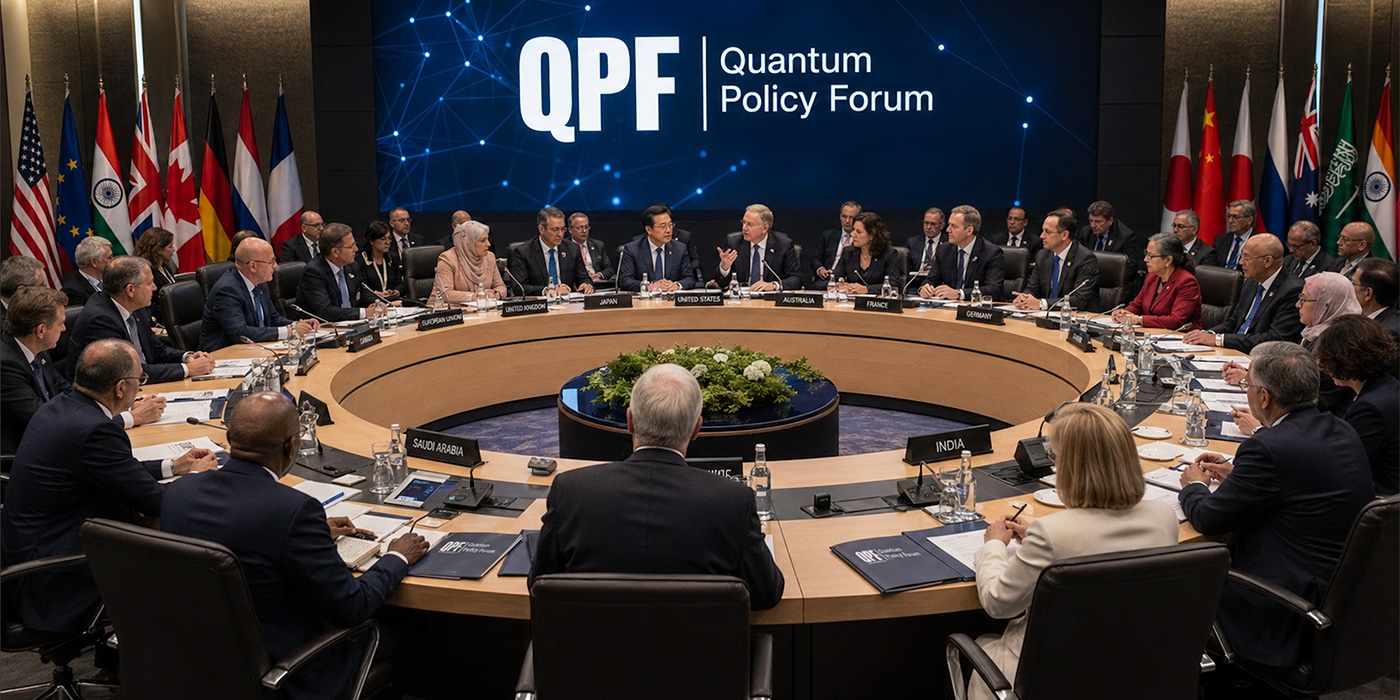
From private advisory to public institution
The Quantum Policy Forum was created to open that intelligence to the field. QPF inherited the full archive (over 1,000 policy tracker entries and a decade of analytical briefings) and publishes the Policy Tracker as a free, continuously updated public record. The deeper analytical layer, including weekly briefings, breaking alerts, quarterly deep-dives, and the subscriber portal, is available through Quantum Policy Radar, QPF’s subscription intelligence service.
QPF is registered as a non-profit in Bled, Slovenia. Quantum Policy Radar operates as a separate Slovenian for-profit entity whose subscription revenue sustains QPF’s non-profit mission and editorial independence. The relationship between QPF and Applied Quantum, including the content transfer, the editorial firewall, and the ongoing advisory arrangement, is documented in full on the Independence and Editorial Firewall page.
The founding team brings decades of experience across cybersecurity, quantum technology, and the institutions responsible for governing both: professional services leadership at IBM, Accenture, PwC, and KPMG alongside founding roles in quantum computing, post-quantum cryptography, and quantum security advisory. That operational background shapes QPF’s analytical perspective: the Forum writes for decision-makers because its team has spent careers in the rooms where those decisions are made.
What this means for readers
The practical consequence is that QPF’s coverage has historical depth that a new institution could not replicate. When we analyse a country’s quantum strategy, we can compare it to what that country committed to three years ago. When we track an export control development, we can place it in the context of the five previous escalations. When we assess a PQC migration deadline, we can compare it to the fourteen other deadlines already set.
That accumulated context is the difference between reporting what happened and explaining what it means. It is the reason QPF’s analysis can answer the question that matters most to our readers: so what?
See the work
Explore the Policy Tracker that grew out of a decade of intelligence work, or learn how Quantum Policy Radar delivers that analysis to subscribers.